Pallet Racking Installation in Nashville, TN.
Davidson County · Central / Airport — local permits, sealed engineering and our own crews.
Installation for Nashville warehouses. Get a free estimate today.
The short answer
What does pallet racking installation in Nashville involve?
In Nashville, installation means a slab and seismic check, Tennessee-PE-sealed drawings, a building permit through the Metro Nashville Department of Codes Administration with high-piled storage review by the Nashville Fire Department Fire Marshal's Office, then anchored, plumbed and load-plaqued rack.
Installing rack in Nashville's older MetroCenter and Airport buildings
Much of the rack we put up inside Davidson County goes into buildings that predate modern distribution: 1960s–1990s shells in MetroCenter, Cockrill Bend, Elm Hill Pike and the Airport district, typically 18–24 ft clear. In those buildings the install is less about stacking height and more about working around what is already there, such as column lines that do not match a standard bay, old equipment pads, and slab joints and patches that a new anchor pattern has to avoid. Our crews often lay frames out around these rather than forcing a catalogue grid onto the floor.
Because Nashville is a consolidated Metro government, the paperwork is simpler than in the suburbs: Metro Codes and the Nashville Fire Department Fire Marshal's Office are the two desks for most addresses. The catch is the satellite cities. A building that feels like Nashville may sit in Goodlettsville, Berry Hill or another satellite city with its own codes office, so we check the parcel before an install date is set.
Site conditions
What shapes installation in Nashville
Corridor
Central / Airport
MetroCenter, Cockrill Bend, Elm Hill Pike and the Airport district
Seismic
ASCE 7 SDC B–C
Typically Seismic Design Category B or C by site class, so base plates, anchors and bracing are checked for it.
Ground
Slab & ground
Central and Airport-district buildings often sit on cut-and-fill pads over limestone, and slabs poured in the 1960s–1990s were rarely designed with rack anchors in mind
Weather
Storms & humidity
the March 3, 2020 tornado cut through North Nashville, Germantown, East Nashville and Donelson, and the May 2010 Cumberland River flood showed what water can do to low-lying buildings
Nearby
Who works here
CSX's Radnor Yard and BNA air cargo
Local expertise
Installation in Nashville, TN
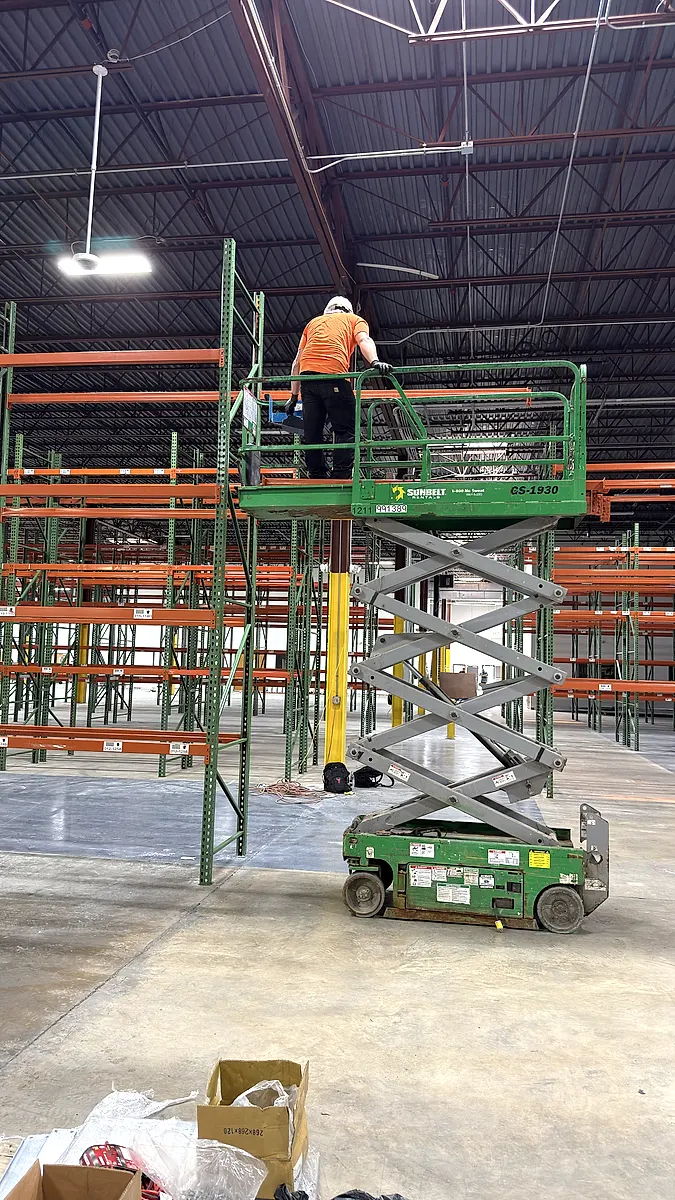
Pallet racking installation in Nashville, TN starts with matching the system to the building. From MetroCenter and Cockrill Bend to the Elm Hill Pike and Airport districts, 1960s–1990s distribution and light-industrial buildings in MetroCenter, Cockrill Bend, Elm Hill Pike, the Airport district and Antioch carry a different anchor and bracing spec than newer Class A big-box distribution buildings where Davidson County meets the I-24 and I-40 corridors. Central and Airport-district buildings often sit on cut-and-fill pads over limestone, and slabs poured in the 1960s–1990s were rarely designed with rack anchors in mind, so we walk and measure every building before drawings are issued.
Your reviewing office here is the Metro Nashville Department of Codes Administration (Metro Codes). Nashville is a consolidated city-county government, so there is no city-versus-county split in Davidson County: Metro Codes reviews the building permit and the Nashville Fire Department Fire Marshal's Office reviews high-piled storage. The exception is the satellite cities inside Davidson (Goodlettsville, Belle Meade, Berry Hill, Forest Hills, Oak Hill and part of Ridgetop), which run their own. Drawings are stamped by a Tennessee-licensed PE and calculated to ANSI/RMI MH16.1 and ASCE 7. Middle Tennessee typically falls in ASCE 7 Seismic Design Category B or C depending on soil site class, so seismic loads are a real input here: base-plate size, anchor count and frame bracing are checked against the site's seismic values under ANSI/RMI MH16.1. Where the commodity and height trigger it, the Nashville Fire Department Fire Marshal's Office reviews high-piled storage; IFC Chapter 32 governs high-piled combustible storage (generally storage above 12 ft, or above 6 ft for high-hazard commodities such as Group A plastics), and the model-code operational permit trigger is more than 500 sq ft of high-piled storage area, so confirm the local amendment with the fire official. We submit building and fire packages the same day so the reviews run concurrently. Older MetroCenter, Cockrill Bend and Elm Hill Pike buildings rarely come with slab drawings, so the slab gets cored and the real column grid surveyed before an anchor detail is issued.
Most installs in Nashville support healthcare supply, food and beverage, building materials and auto parts distribution, near CSX's Radnor Yard and BNA air cargo, and the reason so much rack goes up here is simple: Middle Tennessee carries more than 250 million square feet of industrial space, sits where I-24, I-40 and I-65 converge, and puts roughly half the US population within a day's truck drive.
Nashville, TN Pallet Racking Installation Considerations
- 1960s–1990s distribution and light-industrial buildings in MetroCenter, Cockrill Bend, Elm Hill Pike, the Airport district and Antioch need slab thickness and reinforcement verified by coring before anchors are specified.
- Central and Airport-district buildings often sit on cut-and-fill pads over limestone, and slabs poured in the 1960s–1990s were rarely designed with rack anchors in mind, so floor elevations are shot across the footprint before frames are set.
- Seismic Design Category B or C depending on site class: base plates, anchor count and frame bracing are sized to the site's seismic values, not a catalogue detail.
- The Metro Nashville Department of Codes Administration (Metro Codes) reviews the permit; drawings carry a Tennessee-licensed PE stamp.
- Building and Nashville Fire Department Fire Marshal's Office high-piled reviews are submitted the same day so they run concurrently.
- Crews install to TOSHA requirements, since Tennessee runs its own OSHA State Plan.
How it runs
The Nashville permit pathway
Installation scope
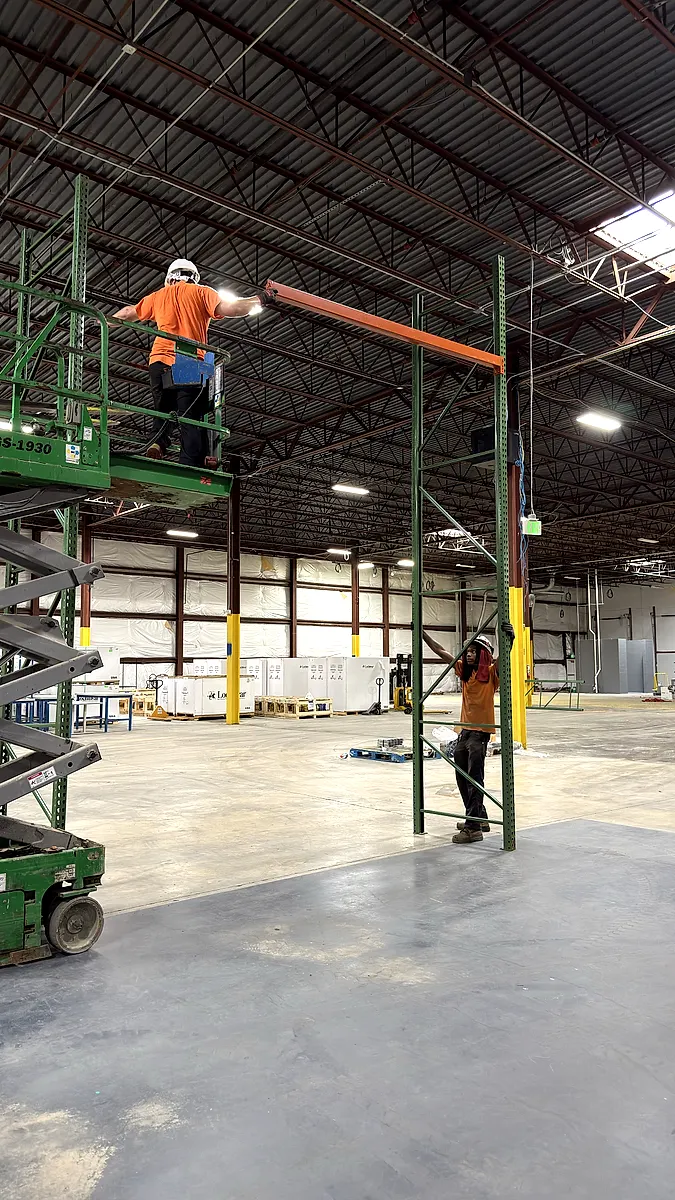
- Certified installation crews with OSHA- and TOSHA-compliant safety practices
- All racking system types: selective, drive-in, push-back, pallet flow
- Complete site assessment and layout planning before installation
- Anchor bolt placement and concrete anchoring per manufacturer specs
- Post-installation inspection and load capacity documentation
- Urgent warehouse projects prioritized where crew availability allows
Straight answers
Installation in Nashville: questions
1 Do I need a permit to install pallet racking in Nashville, TN?
In most cases, yes, and the first question is which office issues it. Tennessee adopts building and fire codes statewide through the State Fire Marshal's Office; cities and counties that enforce their own codes are "exempt" jurisdictions and do their own plan review, while in some unincorporated areas plan review routes through the State Fire Marshal's Office. Nashville is a consolidated city-county government, so there is no city-versus-county split in Davidson County: Metro Codes reviews the building permit and the Nashville Fire Department Fire Marshal's Office reviews high-piled storage. The exception is the satellite cities inside Davidson (Goodlettsville, Belle Meade, Berry Hill, Forest Hills, Oak Hill and part of Ridgetop), which run their own. Drawings are stamped by a Tennessee-licensed PE. If the commodity and height trigger high-piled storage, the Nashville Fire Department Fire Marshal's Office reviews that too; IFC Chapter 32 governs high-piled combustible storage (generally storage above 12 ft, or above 6 ft for high-hazard commodities such as Group A plastics), and the model-code operational permit trigger is more than 500 sq ft of high-piled storage area, so confirm the local amendment with the fire official. Nashville Pallet Rack prepares and submits both packages.
2 How long does rack permitting take in Nashville, TN?
We do not publish a review time for the Metro Nashville Department of Codes Administration (Metro Codes), because we have not measured one and a number we cannot stand behind is worse than no number. What usually sets the critical path is the fire review, not the building permit, so we submit the building permit and the Nashville Fire Department Fire Marshal's Office high-piled storage review on the same day. Nashville Pallet Rack will give you the office's current stated turnaround once jurisdiction is confirmed for your parcel.
3 What rack heights work in Nashville, TN warehouses?
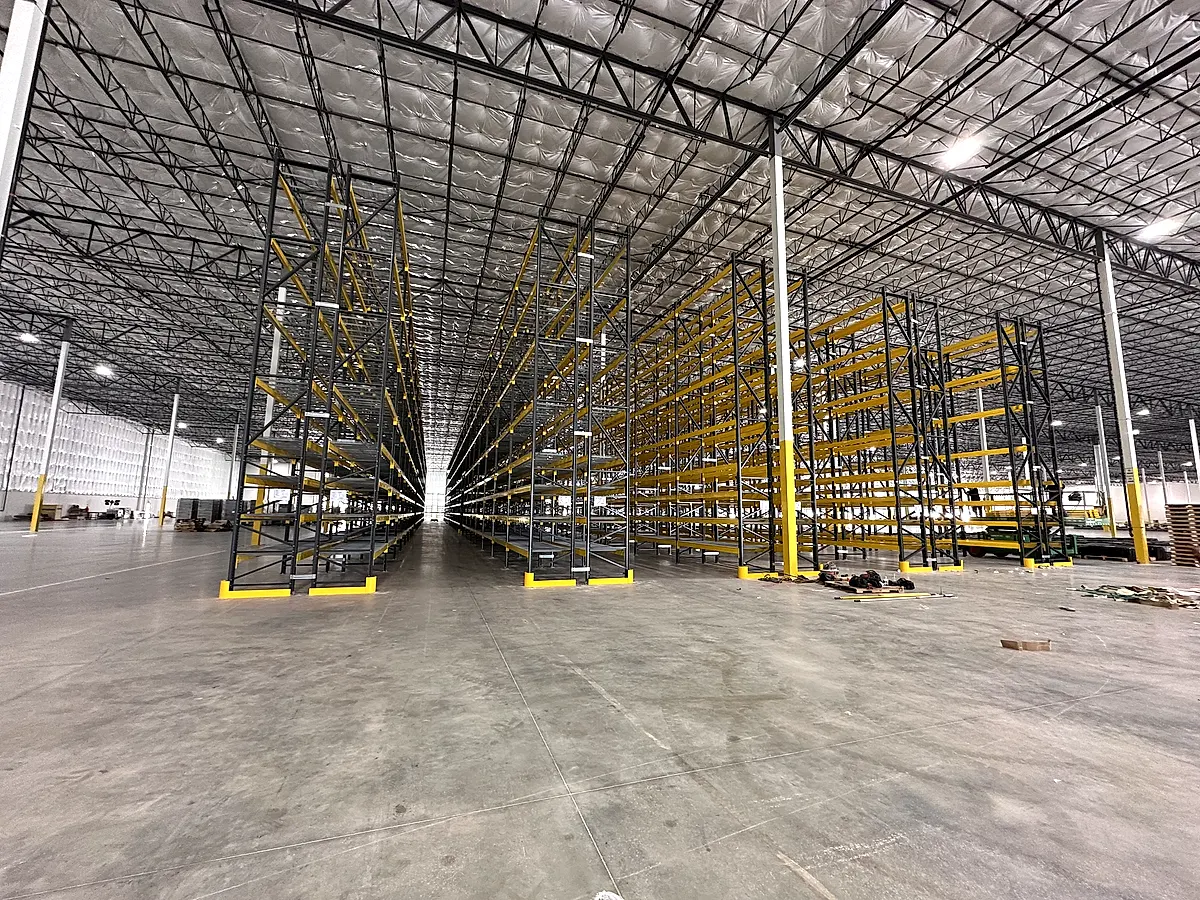
Older Nashville buildings run typically 18–24 ft clear, which suits shorter selective rack. Newer buildings run typically 32–40 ft clear, which supports taller selective and higher-density systems. Nashville Pallet Rack measures clear height against the lowest sprinkler head and the lowest obstruction in the bay, not the roof deck, before specifying. In an ESFR-protected building the sprinkler design sets maximum storage height and flue spacing, so those are inputs to the design rather than variables in it.
4 Does seismic design really matter for rack in Nashville, TN?
Yes. Middle Tennessee typically falls in ASCE 7 Seismic Design Category B or C depending on soil site class, so seismic loads are a real input here: base-plate size, anchor count and frame bracing are checked against the site's seismic values under ANSI/RMI MH16.1. In practice that means the anchor and base-plate detail for a tall, heavily loaded row in Nashville is engineered to the site, and on cut-and-fill pads over limestone we confirm the slab can carry those anchors before the detail is issued.
More services in Nashville
- Rack Inspection & Repair in Nashville, TN
- Engineering & Permitting in Nashville, TN
- Warehouse Design & Space Planning in Nashville, TN
- Used Rack Buyback in Nashville, TN
- Delivery & Relocation in Nashville, TN
- Project & Installation Management in Nashville, TN
- Material Handling Equipment in Nashville, TN
- All pallet racking services in Nashville, TN